Warum Olympia nach Hamburg gehört
Wenn Deutschland investiert, sollte Hamburg davon profitieren. Ein Plädoyer für Spiele in Hamburg von Christoph Pregizer, Gründer PuttView
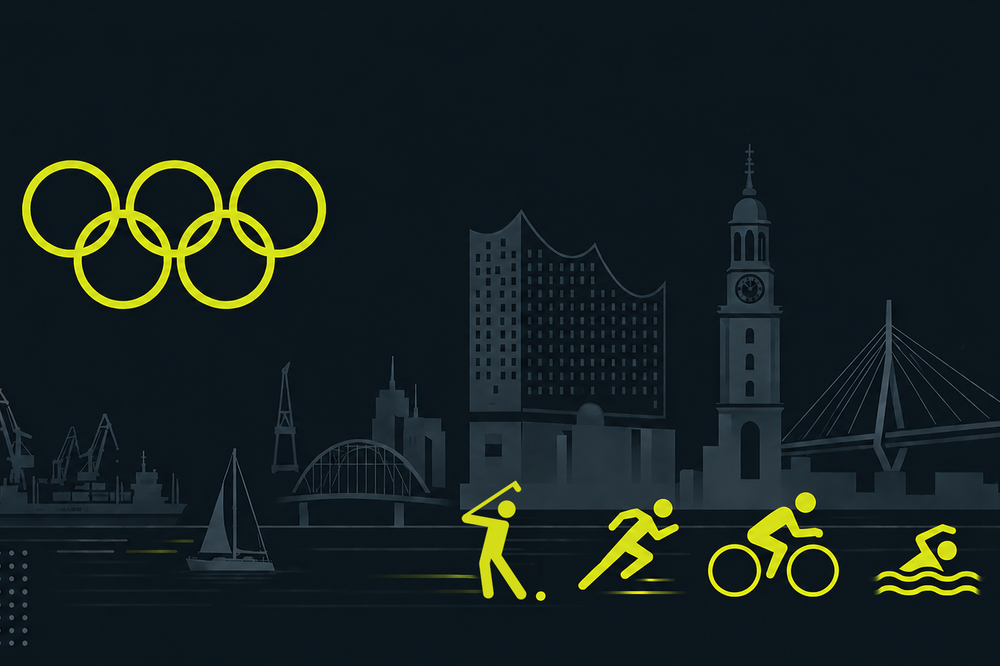
In meiner Jugend hat sich dann vieles auf den alpinen Skisport konzentriert, in dem ich auf Landesebene respektable Leistungen erzielen konnte. Mehrere Verletzungen haben mich schließlich zum Aufhören gezwungen und zum Golf gebracht – immer mit gewisser Ambition betrieben, aber mit klarem Abstand zur Spitze.
Parallel dazu hat mich Sport immer auch als Zuschauer begeistert: FC Bayern, St. Pauli, Michael Schumacher, Ski alpin, Ryder Cup, US Masters. Es gibt nur wenige Bereiche, die mich über einen so langen Zeitraum in dieser Kontinuität begleitet haben.
Warum ich glaube, dass Olympia nach Hamburg gehört
Sport hat in meinem Leben immer eine zentrale Rolle gespielt. Ich bin mit Sport aufgewachsen: angefangen als kleines Kind mit Fußball, Radfahren, Badminton, Leichtathletik und vielen anderen Sportarten, an die ich mich heute zum Teil schon gar nicht mehr erinnere. Fast immer gemeinsam mit Familie und Freunden – entsprechend sind viele meiner prägendsten Erinnerungen eng damit verbunden.
Vor mehr als zehn Jahren – hier in Hamburg – kam eine weitere Perspektive hinzu: die des Unternehmers im SportsTech-Bereich. Mit PuttView arbeiten wir heute mit Spitzensportlern ebenso wie mit ambitionierten Kindern und Jugendlichen, die von der Verbindung aus realem Sport und digitaler Unterstützung fasziniert sind. Wer einmal gesehen hat, mit welcher Begeisterung junge Spieler damit arbeiten, bekommt ein gutes Gefühl dafür, welches Potenzial hier liegt. Seit ich selbst Vater bin, hat dieser Aspekt für mich noch einmal an Bedeutung gewonnen.
All das hat meinen Blick auf den Stellenwert von Sport verändert. Ich sehe heute klarer, welche Rolle er für unsere Gesellschaft spielen kann, insbesondere für die Entwicklung von Kindern und Jugendlichen.
Vor diesem Hintergrund verfolge ich die Diskussion um eine Olympiabewerbung Hamburgs mit besonderer Aufmerksamkeit – und auch mit einer gewissen Emotionalität. Für mich führt diese Auseinandersetzung zu einem klaren Ergebnis: Ich halte eine Bewerbung für richtig. Nicht nur wegen des Ereignisses selbst, sondern vor allem vor dem Hintergrund dessen, was sie auslösen kann.
Über den Wert des Sports jenseits von Unterhaltung
Die öffentliche Debatte über Sport konzentriert sich häufig auf das Sichtbare: Wettkampf, Unterhaltung, mediale Inszenierung. Das greift zu kurz.
Sport vermittelt Werte, die anderswo kaum so konkret erfahrbar sind: Leistungsbereitschaft, Respekt, der Umgang mit Rückschlägen und das langfristige Arbeiten auf ein Ziel hin, dessen Erreichen alles andere als garantiert ist. Gerade in einer Zeit, in der unmittelbare Gratifikation allgegenwärtig ist, hat das eine besondere Bedeutung.
Diese Erfahrungen entstehen nicht theoretisch, sondern im Tun – auf dem Platz, in der Halle, im Verein. Für Kinder und Jugendliche ist das prägend. Die olympischen Werte – Exzellenz, Freundschaft und Respekt – sind deshalb keine abstrakten Begriffe, sondern beschreiben genau das, was im Sport täglich passiert.
Aus unserer Arbeit bei Viewlicity lässt sich das gut beobachten. Wenn der Zugang zu Sport gelingt und Begeisterung entsteht, entfaltet das eine Wirkung, die weit über die eigentliche Aktivität hinausgeht.

Olympia als Chance für nachhaltige Entwicklung
Olympische Spiele sind mehr als ein zweiwöchiges Ereignis. Ihre eigentliche Bedeutung liegt in den Entwicklungen, die sie anstoßen.
Dazu gehören Investitionen in Infrastruktur, Trainingsmöglichkeiten und Strukturen – also genau die Voraussetzungen, die für einen starken Breiten- und Nachwuchssport entscheidend sind. Richtig umgesetzt, wirken solche Investitionen über viele Jahre hinweg. Es geht dabei nicht um abstrakte Effekte, sondern um konkrete Verbesserungen: bessere Bedingungen für Vereine, mehr Zugang zu Sport für Kinder und Jugendliche, modernisierte Anlagen.
Diese Effekte entstehen nicht automatisch. Sie müssen gewollt und gut umgesetzt werden. Aber sie sind möglich und machen den eigentlichen Unterschied.
Die Standortfrage – eine Entscheidung zwischen Städten, nicht gegen Olympia
Ein Punkt wird in der Diskussion oft übersehen: Wenn Deutschland sich um Olympische Spiele bewirbt, geht es nicht mehr um die Frage, ob diese stattfinden sollen, sondern wo.
Ein großer Teil der Investitionen wird auf Bundesebene getragen. Das bedeutet: Die Mittel fließen in jedem Fall – die Frage ist nur, welche Stadt davon profitiert. Für die Regionen ergibt sich daraus eine klare Situation: Entweder sie nutzen diese Chance – oder sie findet andernorts statt. Gerade im internationalen Wettbewerb der Standorte ist das relevant. Olympische Spiele bringen nicht nur Investitionen, sondern auch Sichtbarkeit, wirtschaftliche Impulse und eine langfristige Stärkung der Wahrnehmung einer Stadt.
Vor diesem Hintergrund wäre es schwer nachvollziehbar, diese Möglichkeit nicht zumindest ernsthaft in Betracht zu ziehen.
Paris hat gezeigt, dass es anders geht
Viele Vorbehalte gegenüber Olympischen Spielen sind nachvollziehbar: Kostensteigerungen, überdimensionierte Projekte, mangelnde Nachhaltigkeit.
Die Spiele in Paris haben gezeigt, dass ein anderer Ansatz möglich ist – stärker integriert in die bestehende Stadt, mit mehr Fokus auf vorhandene Infrastruktur und näher an den Menschen. Das löst nicht alle Probleme. Aber es zeigt, dass die entscheidende Frage nicht ist, ob Olympische Spiele grundsätzlich problematisch sind, sondern wie sie umgesetzt werden. Und ich bin überzeugt, dass wir in der Lage sind, das verantwortungsvoll zu tun.
Warum Hamburg?
Hamburg ist historisch und strukturell von Internationalität und Weltoffenheit geprägt. Der Hafen steht dabei sinnbildlich für eine Offenheit, die sich über Jahrhunderte entwickelt hat.
Gleichzeitig ist die Stadt groß genug, um ein solches Ereignis zu tragen, ohne die Dimensionen anzunehmen, in denen sich Veranstaltungen schnell auf Grund zu großer Distanzen verlieren.
Dass Hamburg eine besondere Atmosphäre schaffen kann, habe ich selbst erlebt. Im Sommer 2006 war ich für einige Monate hier, als die Fußball-Weltmeisterschaft stattfand – und wie viele andere war ich beeindruckt von der Stimmung in der Stadt. Nicht nur durch den Sport selbst, sondern durch das Miteinander der Menschen.

Fazit
Mein klares Plädoyer ist: dem Sport in Hamburg die Chance zu geben, sich weiterzuentwickeln – und die Olympiabewerbung als das zu begreifen, was sie sein kann: ein Impuls für die Zukunft dieser Stadt.
Die Entscheidung darüber wird am Ende nicht nur eine Frage der Kosten sein, sondern auch eine Frage der Haltung. Ob wir bereit sind, Chancen zu nutzen und unsere Stadt aktiv weiterzuentwickeln – oder ob wir uns mit dem Status quo zufriedengeben.
Ich bin überzeugt, dass Hamburg mehr kann!
Why the Olympics Belong in Hamburg AI Translation
If Germany is going to invest, Hamburg should be the one to benefit. A case for Games in Hamburg by Christoph Pregizer, Founder of PuttView
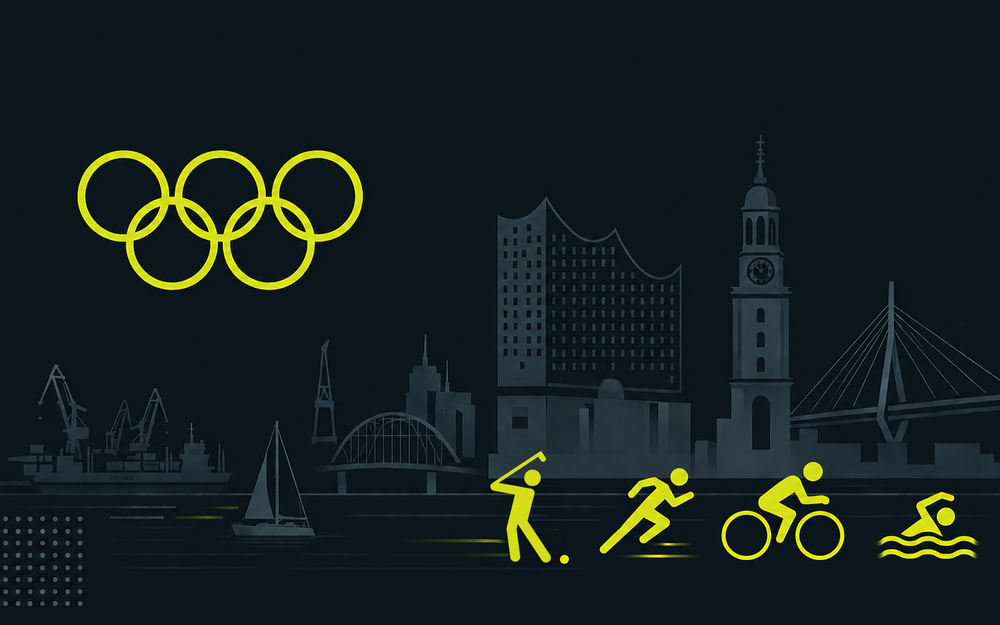
Why I believe the Olympics belong in Hamburg
Sport has always played a central role in my life. I grew up with it: starting as a young child with football, cycling, badminton, athletics, and countless other activities I can barely remember today. Almost always together with family and friends, which is why so many of my most formative memories are closely tied to those experiences.
In my teenage years, alpine skiing became my main focus, and I reached a respectable level on the regional stage. Several injuries eventually forced me to stop, and that's what brought me to golf — always pursued with a certain ambition, but with a clear gap to the very top. Alongside all of this, sport has always captivated me as a spectator too: FC Bayern, St. Pauli, Michael Schumacher, alpine skiing, the Ryder Cup, the US Masters. There are very few things that have accompanied me with such consistency over such a long stretch of my life.
More than ten years ago, here in Hamburg, another perspective was added: that of an entrepreneur in the SportsTech space. With PuttView, we now work with elite athletes as well as ambitious children and teenagers who are fascinated by the combination of real sport and digital support. Anyone who has seen the enthusiasm with which young players engage with it gets a strong sense of the potential that lies there. Since becoming a father myself, this aspect has taken on an even deeper meaning for me.
All of this has changed how I see the role of sport. I now see more clearly what it can mean for our society, and in particular for the development of children and young people.
With that as my backdrop, I have been following the debate around a Hamburg Olympic bid with particular attention, and with a certain degree of emotion. For me, the question leads to a clear conclusion: I believe a bid is the right move. Not just because of the event itself, but above all because of what it can set in motion.
On the value of sport beyond entertainment
Public debate about sport tends to focus on what is visible: competition, entertainment, media spectacle. That does not go far enough.
Sport conveys values that are rarely as tangible anywhere else: a commitment to performance, respect, learning to deal with setbacks, and working toward a goal over the long term with no guarantee of ever reaching it. At a time when instant gratification is everywhere, that matters.
These experiences do not arise in theory. They emerge through doing, on the pitch, in the gym, in the club. For children and young people, that is formative. The Olympic values of excellence, friendship and respect are therefore not abstract concepts. They describe exactly what happens in sport every day.
This is something we see clearly through our work at Viewlicity. When access to sport succeeds and genuine enthusiasm develops, the effect reaches far beyond the activity itself.
The Olympics as an opportunity for lasting development
The Olympic Games are more than a two-week event. Their real significance lies in the developments they trigger.
That includes investment in infrastructure, training facilities and structures, precisely the foundations that matter most for a strong grassroots and youth sport ecosystem. When done well, those investments play out over many years. These are not abstract effects but concrete improvements: better conditions for clubs, greater access to sport for children and young people, modernised facilities.
None of this happens automatically. It has to be genuinely intended and well executed. But it is possible, and that is where the real difference lies.
The question of location: a choice between cities, not a vote against the Olympics
One point is often missed in the debate: if Germany puts in a bid for the Olympic Games, the question is no longer whether they should happen, but where.
A large share of the investment is carried at the federal level. That means the funds will flow regardless. The only question is which city benefits. For any region, the situation is straightforward: either you take the opportunity, or it goes somewhere else. In an era of intense international competition between cities, that matters. The Olympics bring not just investment but visibility, economic momentum and a lasting boost to how a city is perceived.
Against that backdrop, it would be hard to understand why this possibility would not at least be taken seriously.
Paris showed that a different approach is possible
Many reservations about the Olympic Games are understandable: cost overruns, oversized projects, a lack of sustainability.
Paris showed that another way is possible, more deeply integrated into the existing city, with a stronger focus on existing infrastructure, and closer to real people. That does not resolve every problem. But it demonstrates that the key question is not whether the Olympics are inherently problematic, but how they are delivered. And I am convinced that we are capable of doing this responsibly.
Why Hamburg?
Hamburg has been shaped by internationalism and openness, historically and structurally. The port stands as a symbol for an outward-looking spirit that has developed over centuries.
At the same time, the city is large enough to host an event of this scale without reaching the dimensions where things get lost in sheer distance and sprawl.
That Hamburg can create a truly special atmosphere is something I experienced first-hand. In the summer of 2006, I spent several months here during the football World Cup, and like so many others I was struck by the mood in the city. Not just because of the sport itself, but because of the way people came together.
Conclusion
My clear case is this: give sport in Hamburg the chance to grow, and embrace the Olympic bid for what it can be — a catalyst for this city's future.
The decision will not ultimately come down to cost alone. It will also be a question of attitude. Whether we are willing to seize opportunities and actively shape the future of our city, or whether we are content with the status quo.
I am convinced that Hamburg is capable of more.